

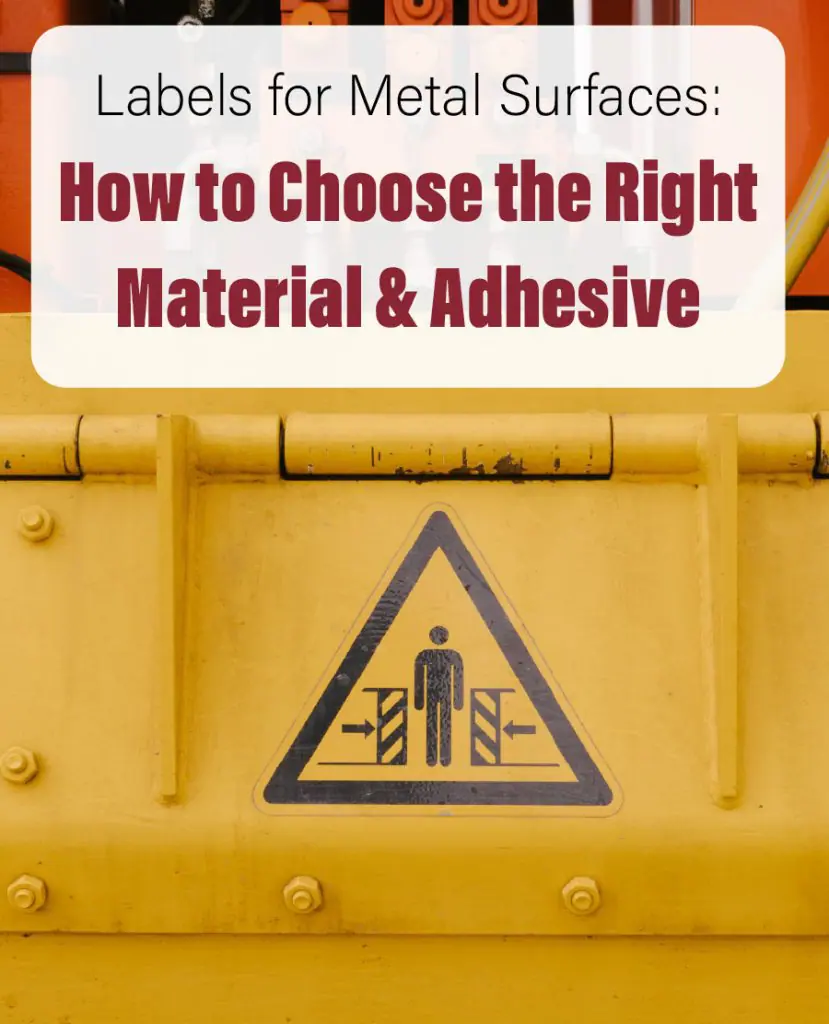
Getting a label to stick permanently to metal depends on more than choosing a “permanent” adhesive. The adhesive has to be matched to the actual surface of the metal, including any paint, powder coating, texture, oxidation or contamination present.
Bare stainless steel and aluminum are generally favorable bonding surfaces for many pressure-sensitive adhesives. Powder-coated, painted, textured or lightly oily metal can be considerably more challenging.
That means the first question shouldn’t be:
“What label sticks to metal?”
It should be:
“What exact surface is this label going to stick to?”
Successful metal labeling requires matching the:
This guide explains how to choose labels and adhesives for stainless steel, aluminum, powder-coated metal, painted surfaces and other common industrial metal applications.
Two metal parts can look almost identical while presenting completely different bonding conditions.
A pressure-sensitive adhesive doesn’t actually bond to the underlying metal if another material covers it.
For example, when a label is applied to:
That’s why “metal” isn’t specific enough when selecting an industrial label adhesive.
The actual surface chemistry and texture determine how easily the adhesive can make intimate contact with the substrate.
Surface energy describes how readily an adhesive can spread—or wet out—across a surface.
Good adhesive performance requires sufficient contact between the pressure-sensitive adhesive and the substrate.
On a relatively high-surface-energy surface, the adhesive can generally wet out more readily and adequately stick to the surface.
On a lower-surface-energy surface, the adhesive resists spreading and may require a formulation designed specifically for difficult bonding conditions.
This is why a general-purpose adhesive can perform very well on one piece of equipment but begin lifting when applied to another.
Common higher-surface-energy substrates can include:
These surfaces are generally more receptive to pressure-sensitive adhesive bonding.
More challenging substrates can include:
These applications frequently benefit from adhesives engineered specifically for low-surface-energy or difficult surfaces, so the adhesive wets (spreads) on the substrate surface to form a proper molecular bond.
Specification takeaway: Don’t choose an adhesive based only on whether the substrate is “metal.” Identify the actual finished surface.
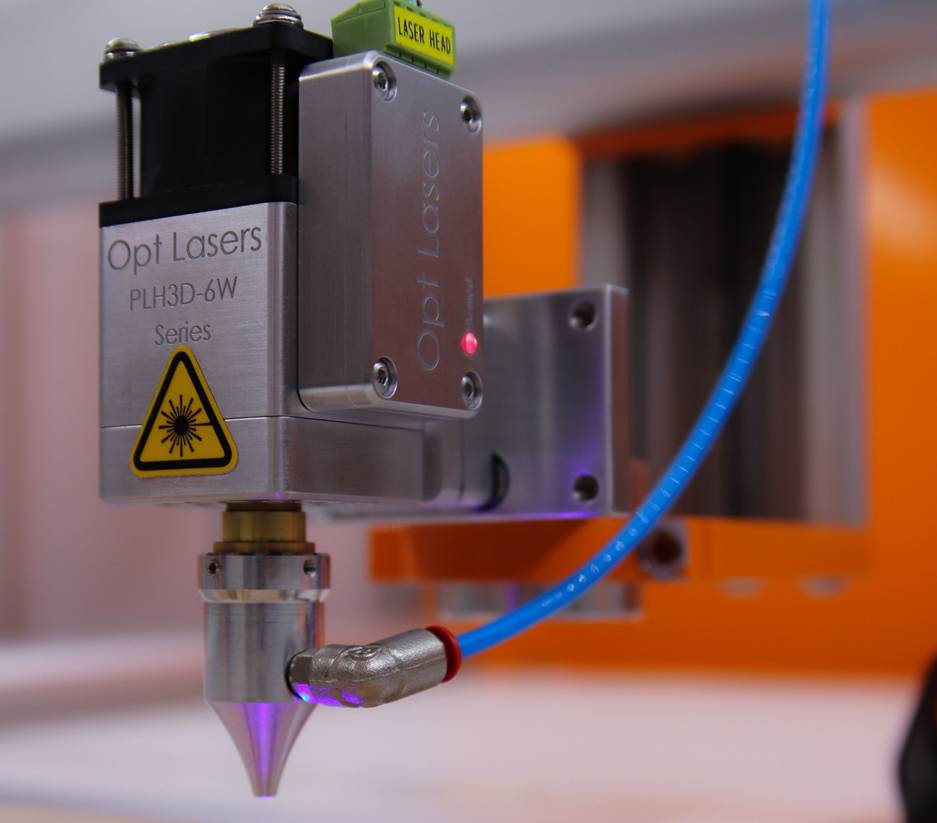
Stainless steel is generally a favorable surface for pressure-sensitive adhesive bonding when it is clean, dry and free of contaminants.
High-performance acrylic adhesives can develop strong bonds to stainless steel.
For example, testing of certain 3M 300LSE constructions available through Label-Aid demonstrates substantial peel adhesion to stainless steel, with bond strength increasing after additional dwell time.
That last point matters.
Pressure-sensitive adhesives can continue to wet out after application, so the bond achieved immediately after installation may not represent the final bond strength.
Stainless-steel applications can include:
Even though stainless steel is generally adhesive-friendly, the environment still matters.
A label on stainless steel exposed to solvents, outdoor weather or high heat may require a very different construction from a label attached to an indoor stainless cabinet.
Bare aluminum generally provides a good bonding surface for properly selected acrylic pressure-sensitive adhesives.
Applications include:
However, surface condition matters.
Aluminum may have:
These can affect adhesion.
For that reason, an aluminum application should be evaluated based on the actual finished part rather than assuming every aluminum surface behaves identically.
Labels can adhere successfully to anodized aluminum, but the anodized finish should be considered part of the bonding surface.
Anodizing changes the surface of the aluminum to create a protective oxide layer.
Different anodized finishes can vary in:
A clean, relatively smooth anodized surface may be a straightforward labeling application.
A heavily textured or specialized finish may require more evaluation.
When requesting a quote, identify the surface as anodized aluminum rather than simply “aluminum.”
That extra information can affect adhesive selection.
Galvanized steel is steel coated with zinc, so the adhesive is interacting with the zinc surface rather than bare steel.
New, clean galvanized material may provide acceptable bonding conditions for many industrial adhesives.
However, aged or weathered galvanized steel may develop oxidation products, dirt or other surface conditions that interfere with adhesion.
For outdoor galvanized equipment, the label construction may also need to account for:
Surface preparation and application testing become more important when galvanized material has already been exposed to the environment.
Powder-coated metal is one of the most important surfaces to identify before selecting a label adhesive.
The adhesive isn’t actually sticking to the steel or aluminum underneath.
It’s sticking to the powder coating.
Powder coatings can differ substantially in:
A relatively smooth powder coating may be easier to bond than a coarse or heavily textured finish.
A rough finish also creates a mechanical problem: less adhesive may make intimate contact with the surface.

The label may touch the high points of the texture without fully wetting into the low areas.
That reduction in actual contact area can contribute to:
For these applications, a higher-performance adhesive or thicker adhesive coat may be appropriate.
Label-Aid specifically works with adhesive systems intended for powder-coated surfaces and other difficult substrates. Its current material guidance identifies powder-coated metal as one of the surfaces requiring application-specific adhesive selection.
An adhesive developed for difficult or low-surface-energy surfaces is often a good starting point for powder-coated metal.
One example available through Label-Aid’s material systems is 3M 300LSE high-strength acrylic adhesive.
The 300LSE family is engineered to provide strong adhesion to many surfaces including:
Certain constructions are available with adhesive thicknesses of approximately:
The appropriate thickness can depend partly on surface texture and the amount of adhesive wet-out required.
A thicker adhesive does not automatically mean a better label, however.
The actual powder coating and finished equipment surface should be considered when specifying the construction.
Best practice: If the powder coating is especially textured or unusual, testing the proposed label on the actual finished part is preferable to selecting an adhesive from the coating description alone.
Yes, labels can bond successfully to painted metal, but the adhesive bonds to the paint—not directly to the metal underneath.
That means paint characteristics affect performance.
Important variables include:
If the paint itself is poorly bonded to the substrate, even an excellent label adhesive cannot fix the problem.
The label may remain bonded to the paint while the paint separates from the metal underneath.
Freshly painted surfaces can present another challenge because paints and coatings may continue curing or releasing compounds after they initially feel dry.
For critical applications, the coating should be fully cured according to the coating manufacturer’s recommendations before labels are installed.
A clean, dry metal surface is preferable whenever possible, but certain industrial adhesives are designed to tolerate light oil contamination better than general-purpose adhesives.
This is particularly relevant in manufacturing environments where surfaces may come into contact with:
Certain 3M 300LSE adhesive constructions available through Label-Aid are specifically designed to provide adhesion to surfaces lightly contaminated with oils typical of machine parts.
That does not mean oil should intentionally be left on a surface.
Whenever practical, contaminants should still be removed before labeling.
Instead, these adhesive systems provide another option when the application environment makes perfectly controlled surfaces difficult to achieve.
When a label lifts from a metal component, one of several problems is usually responsible.
This is especially common when a standard adhesive is used on:
The facestock may be perfectly suitable while the adhesive isn’t.
A pressure-sensitive adhesive needs direct contact with the mounting surface.
If a layer of:
sits between the adhesive and substrate, the adhesive may be bonding to the contamination instead of the equipment.
A rough surface reduces actual adhesive contact.
Imagine pressing a flat sheet onto a surface covered with microscopic hills and valleys.
If the adhesive contacts only the hilltops, less total bonding area is available.
A more conformable material, different adhesive chemistry or thicker adhesive layer may be needed.
Pressure-sensitive adhesive needs to flow sufficiently during installation to wet out the surface.
Cold temperatures can make the adhesive less able to conform.
This means a label may be rated to operate below freezing while still requiring a considerably warmer surface during application.
Application temperature and service temperature are different specifications.
Pressure-sensitive adhesives require pressure.
Firm, even pressure helps the adhesive spread across the substrate and establish contact.
Simply laying a label onto the surface without pressing it firmly may reduce initial adhesion.
Adhesive bond strength can increase after application.
Certain 3M high-performance adhesives continue building bond strength as the adhesive wets the substrate.
Testing of 300LSE constructions, for example, shows higher peel values after 72 hours than after 15 minutes on substrates including stainless steel.
When possible, allowing dwell time before exposing the label to extreme service conditions can improve performance.
Proper surface preparation can be just as important as selecting the adhesive.
Remove materials that could interfere with adhesive contact, including:
The appropriate cleaning procedure depends on the equipment and coating involved.
A cleaning method should not damage, soften or chemically attack the finished surface.
Residual cleaner or moisture can interfere with adhesive contact.
The surface should generally be clean and dry before the label is installed.
Do not assume service temperature and application temperature are the same.
For example, an adhesive may perform at very low temperatures once fully bonded while requiring a warmer initial application surface.
This is especially important when labeling:
Use adequate pressure across the entire label, paying particular attention to:
This helps maximize adhesive wet-out.
When possible, avoid immediately subjecting a newly applied label to:
Giving the adhesive time to build its bond can improve final performance.
The mounting surface determines much of the adhesive selection, while the operating environment determines much of the facestock selection.
For many industrial metal applications, polyester is an excellent starting point.
But it isn’t the only option.
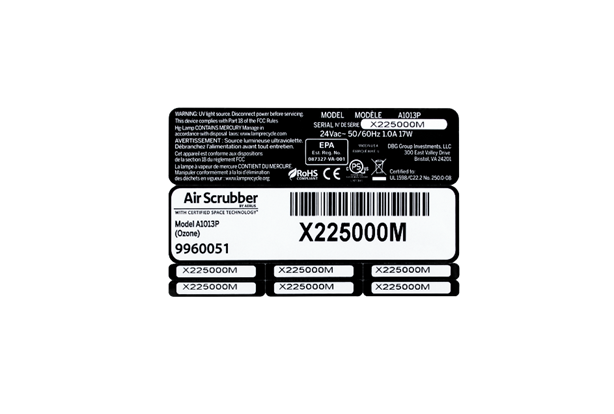
Polyester is frequently used for:
Certain polyester constructions available through Label-Aid provide temperature resistance extending from approximately -40°F to 302°F (-40°C to 150°C).
Polyester can also provide:
Different adhesives can then be paired with the polyester depending on whether it is going onto stainless steel, powder coating, plastic or another substrate.
Label-Aid currently identifies polyester as a first-choice material for many harsh-environment and high-durability applications.
Vinyl can be particularly useful when the surface is:
One extended-life vinyl material available through Label-Aid is specifically described as flexible and conformable and uses a high-performance acrylic adhesive designed to adhere well to textured surfaces and powder coatings.
Its listed applications include:
This makes conformable vinyl an option worth considering when a rigid construction cannot establish enough contact with the finished metal surface.
When a label will experience repeated:
a hard-coated polyester construction may be appropriate.
Certain hard-coated polyester films available through Label-Aid provide enhanced scratch and abrasion resistance and resistance to common cleaners and industrial solvents.
A protective polyester overlaminate can add another layer between the printed image and the environment.
Depending on the construction, an overlaminate can improve protection against:
This can be especially useful for warning information, barcodes and other graphics that must remain readable throughout the life of the equipment.
Label-Aid’s current materials offering also includes laminates and varnishes for moisture, UV and scuff resistance.
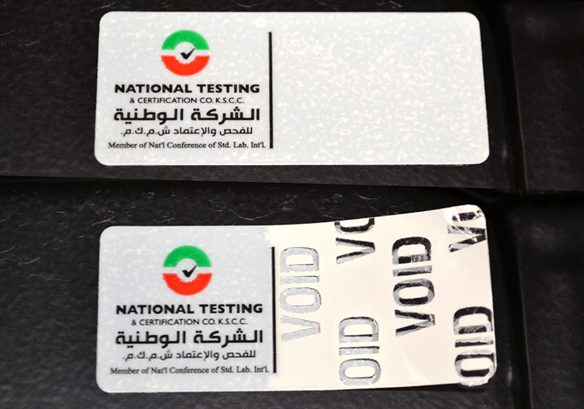
Equipment identification can also require evidence that a label has been removed.
VOID-type polyester constructions can leave a visible pattern when removal is attempted.
These can be useful for:
Outdoor metal labeling requires consideration of both adhesion and environmental durability.
A label may need to tolerate:
Polyester and vinyl are common outdoor options, and protective laminates can be used where additional protection is required. Label-Aid currently offers outdoor constructions based on durable polyester and vinyl and specifies material, adhesive and protective options according to the application.
The adhesive should also be appropriate for the actual outdoor surface.
For example:
Outdoor stainless steel + smooth surface
may require a different construction from:
Outdoor heavily textured powder-coated steel.
The fact that both parts are metal does not make the labeling requirements the same.
The maximum temperature depends on the entire label construction—not simply the fact that it is applied to metal.
The critical components include:
Certain 3M 300LSE adhesive constructions, for example, have documented short-term temperature resistance around 300°F (149°C) and longer-term resistance around 200°F (93°C).
Other high-performance acrylic adhesive systems may have different capabilities.
For higher-temperature applications, polyester or specialty high-temperature materials may be required depending on the complete environment.
This is why the question should be:
“What temperature will the finished label construction experience, and for how long?”
rather than simply asking for a “high-temperature adhesive.”
The most useful information you can provide isn’t simply:
“I need a label that sticks to metal.”
Instead, tell us:
For example:
If powder coated, describe the texture.
A sample part can be especially valuable for unusual finishes.
Tell us about:
Provide:
Outdoor environments introduce UV, moisture and temperature cycling.
Identify the actual chemicals whenever possible.
“Chemical resistant” isn’t one universal specification.
Consider:
A temporary process label and a permanent equipment nameplate require different constructions.
Before requesting a quote, provide as much of the following information as possible:
The more precisely you identify the actual finished surface, the more precisely the adhesive can be selected.
Label-Aid Systems has manufactured custom labels, decals, nameplates and graphic overlays since 1976.
As an ISO 9001:2015-certified manufacturer, Label-Aid produces custom identification products for industrial and OEM applications using printing capabilities that include:
But successful metal labeling isn’t simply a printing question.
It is a material-and-adhesive selection problem.
Label-Aid works with multiple adhesive chemistries and material constructions so the finished label can be selected around factors such as:
The goal is not simply to manufacture a label that looks correct.
The goal is to build a label construction that remains attached and readable on the actual finished equipment.
There is no single best label for every metal surface. Clean stainless steel and aluminum generally provide favorable bonding surfaces, while powder-coated, painted, textured or contaminated metals can require specialized adhesives. The adhesive should be matched to the actual finished surface.
Common causes include incorrect adhesive selection, oil or contamination, insufficient application pressure, applying the label below its recommended temperature, heavily textured surfaces or putting the label into demanding service before adequate bond development.
Powder-coated metal often benefits from an adhesive designed for difficult or low-surface-energy surfaces. Label-Aid has access to high-performance acrylic adhesives, including 3M 300LSE constructions, that are specifically designed to bond to many powder coatings.
Yes. Clean, dry stainless steel is generally a favorable substrate for many high-performance acrylic pressure-sensitive adhesives.
Yes. Labels commonly bond successfully to clean aluminum, although oxidation, surface treatments, oils and coatings should be considered during adhesive selection.
Certain high-performance adhesives are designed to tolerate light oil contamination better than general-purpose adhesives. Clean, dry surfaces are still preferred whenever possible.
Remove dirt, loose oxidation, oil and other contaminants; allow the surface to dry; apply the label within the adhesive’s recommended application-temperature range; and use firm, even pressure across the entire label.
The best construction depends on powder-coat chemistry, texture and the environment. A durable polyester or conformable vinyl paired with an adhesive designed for powder coatings is often a good starting point, but demanding surfaces should be tested.
Durable polyester and vinyl are common options for outdoor equipment. The adhesive, ink and protective layer should also be selected for UV, moisture, temperature cycling and the actual surface.
Temperature capability depends on the facestock, adhesive, ink and exposure duration. Certain industrial polyester constructions can operate around 300°F, while specialty high-temperature materials may be required beyond that range.
You don’t need to know which adhesive number to specify.
Tell Label-Aid:
What type of metal you’re labeling. What finish or coating is on it. And what the label has to survive.
If the surface is powder coated, painted, textured or regularly exposed to oil, tell us that too.
Those details help determine an appropriate combination of label material, adhesive and protective construction for the application.