

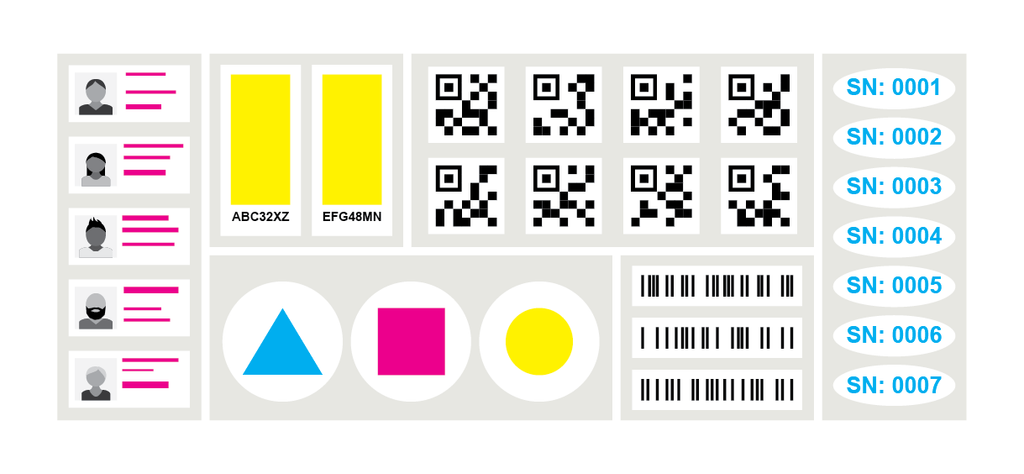
Barcodes may look simple, but choosing the right barcode for an industrial, manufacturing, retail, or tracking application involves more than deciding between a set of vertical lines and a square 2D code.
The barcode symbology you choose affects how much information can be encoded, how large the finished barcode must be, what type of scanner can read it, how easily it can be serialized, and how reliably it will perform once the label is exposed to real-world conditions.
For manufacturers, the barcode is also only one part of the identification system. The label material, adhesive, laminate, print quality, application surface, operating environment, and scanning equipment all contribute to whether the code remains readable throughout the life of the product.
A barcode symbology is the system—or “language”—a barcode uses to represent information.
Different symbologies use different arrangements of bars, spaces, squares, or modules to encode data. Each one also has rules governing what kinds of characters it can contain, how information is structured, and how a scanner interprets the symbol.
Choosing the right barcode usually comes down to three basic questions:
For short numeric or alphanumeric identifiers scanned using conventional industrial equipment, a 1D or linear barcode such as Code 128 or Code 39 is often appropriate.
When more information must fit into a small area—or when error correction, serialization, or camera scanning is important—a 2D symbology such as Data Matrix or QR Code may be a better choice.
GS1 (the organization that sets standards for barcodes) uses multiple barcode types because different supply-chain applications have different identification and data requirements.
This guide explains the most common barcode symbologies, their advantages and limitations, and the factors manufacturers should consider before choosing one.
A 1D barcode, also called a linear barcode, stores information horizontally through a pattern of bars and spaces.
These codes are widely used because they are well established, relatively simple to produce, and compatible with a large installed base of scanning equipment.
In many industrial applications, the barcode itself contains a relatively short identifier—such as a product number, work-order number, asset number, or serial number—which connects the scanned item to more detailed information stored in a database.
One important consideration with linear barcodes is physical width. As additional information is encoded, the barcode generally becomes wider. That means the amount of available label space can become an important factor when choosing between a 1D and 2D symbology.
Code 128 is one of the most versatile general-purpose linear barcode symbologies.
Code 128 supports the full 128-character ASCII character set, allowing it to represent:
This flexibility makes Code 128 particularly useful for industrial applications where identifiers may contain a combination of letters and numbers.
One of Code 128’s biggest advantages is data density.
It can encode information relatively efficiently compared with many older barcode formats. Numeric portions can be encoded especially compactly, making it useful when a there is limited horizontal space.
Common applications include:
Code 128 refers to the barcode symbology itself.
GS1-128 uses the Code 128 symbology but follows GS1 rules for structuring standardized supply-chain data. GS1 Application Identifiers can define what pieces of information represent—for example, a GTIN, batch or lot number, serial number, or expiration date.
This distinction is important because simply printing a Code 128 barcode does not automatically make it a GS1-128 barcode.
Code 128 is an excellent starting point when:
Code 39, also called Code 3 of 9, is another long-established industrial barcode symbology.
Standard Code 39 supports:
Code 39 has been used for decades in industrial and government environments and remains important where established specifications, customer requirements, or legacy scanning systems call for it.
Typical applications include:
For many new general-purpose applications, Code 128 can store comparable information in less space.
Code 39, however, may still be the correct choice when an existing customer specification, industry standard, or internal system requires it.
This is an important point when selecting any barcode:
The most efficient symbology is not necessarily the correct symbology if your system requires something else.
Before changing an existing barcode format, it should be determined whether the barcode is governed by a technical drawing, industry specification, ERP system, scanning system, or compliance requirement.
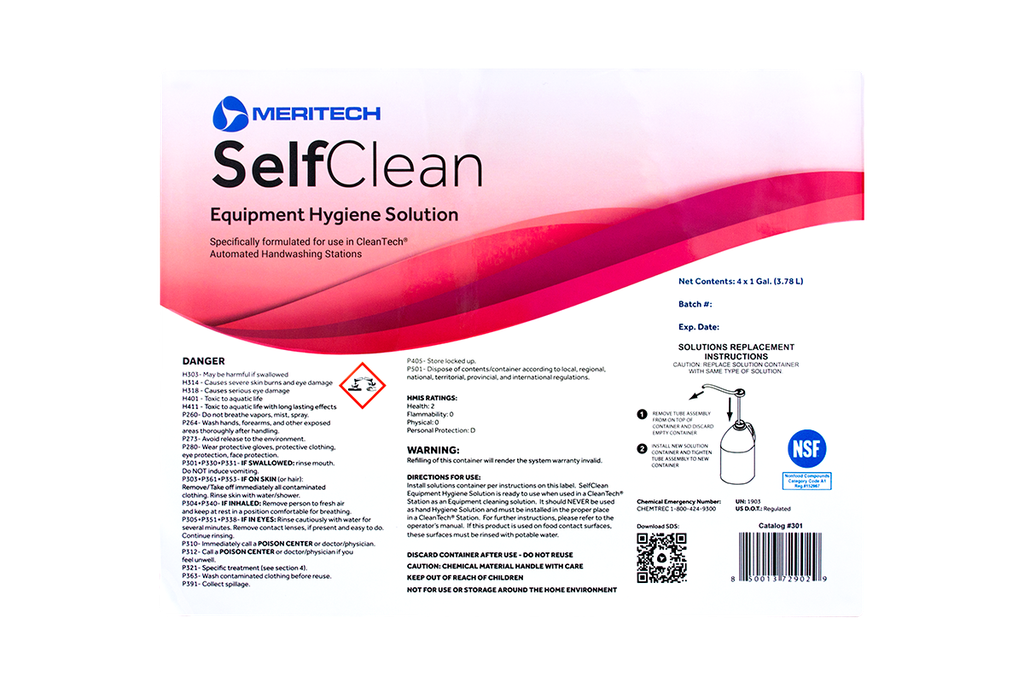
UPC and EAN barcodes are most closely associated with retail products.
UPC-A contains a fixed-length numeric identifier and is commonly found on products sold through retail point-of-sale systems.
EAN-13 serves a similar role internationally and contains 13 digits.
These symbologies are designed primarily for products entering retail channels.
Typical applications include:
If a barcode will only be used internally for manufacturing, asset tracking, or warehouse identification, UPC or EAN may not be necessary.
Interleaved 2 of 5, commonly abbreviated ITF, is a numeric-only linear barcode.
It is relatively compact and has historically been useful for logistics and packaging applications.
ITF-14 is commonly associated with the identification of cartons, cases, and other shipping units within GS1 systems.
Typical uses include:
Because ITF is numeric only, it is less flexible than symbologies such as Code 128 when letters or other characters need to be encoded.
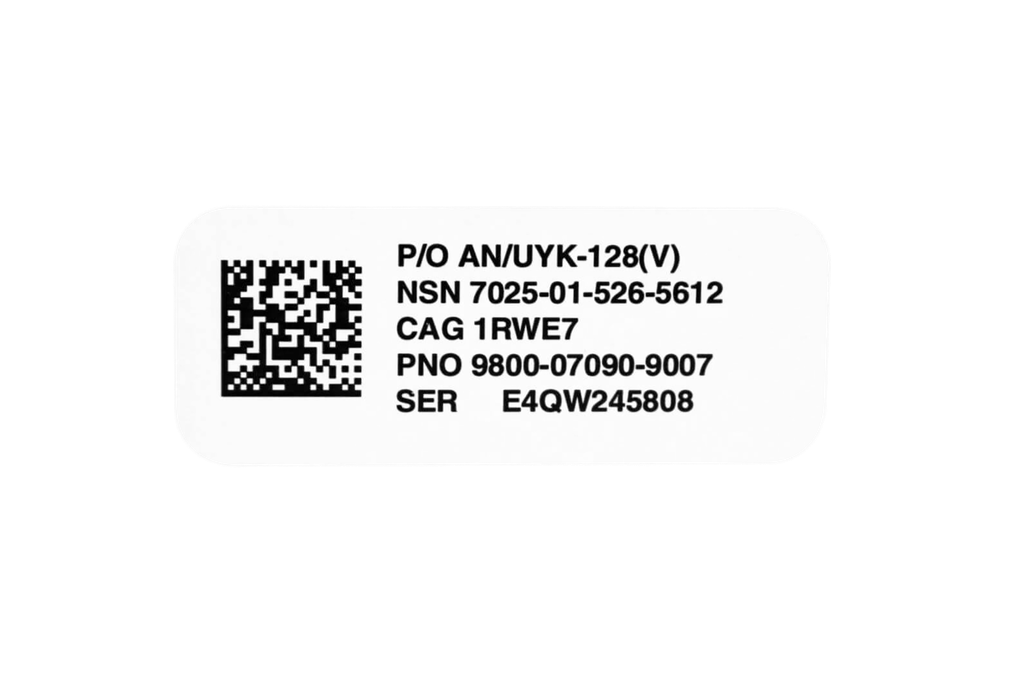
A 2D barcode stores information both horizontally and vertically using a pattern of modules or cells.
This structure allows much more information to be stored in a relatively small area.
Common 2D symbologies include:
Another major advantage of 2D codes is error correction. Depending on the symbology and configuration, portions of the code may be damaged while the remaining information can still allow successful decoding.
Unlike traditional linear laser scanning, 2D codes generally require an imaging or camera-based scanning system.
If upgrading from a 1D system, scanner compatibility should be checked before changing barcode formats.
Data Matrix is one of the most important 2D barcode symbologies for industrial identification and traceability.
It is particularly useful when a large amount of information must be placed into a small space.
Data Matrix codes can be extremely compact, making them well suited for:
Rather than requiring a long horizontal area like a linear barcode, Data Matrix stores information in a square or rectangular grid.
That can make the code easier to integrate into small product labels where space is limited.
Modern Data Matrix codes commonly use ECC 200 error correction, helping scanners decode the symbol when portions have become damaged or obscured.
That capability can be valuable in industrial environments where identification marks may experience abrasion, contamination, handling, or other physical exposure.
GS1 DataMatrix uses the Data Matrix symbology with GS1’s standardized data structure.
GS1 notes that Data Matrix can carry standardized information such as product identifiers, batch or lot information, expiration data, and serial numbers, and GS1 DataMatrix is already widely used in healthcare.
GS1 Application Identifiers tell systems what each encoded value means, reducing ambiguity as products move between organizations.
Data Matrix is particularly attractive when:
QR Codes are another widely recognized form of 2D barcode.
Their biggest advantage is broad accessibility. Unlike many traditional industrial barcode formats, QR Codes can be read using common smartphone cameras in addition to dedicated imaging equipment.
QR Codes are particularly useful for applications in which the person scanning the code is a customer, technician, installer, or other user who may not have specialized barcode equipment.
Applications include:
QR Codes are not limited to marketing.
They can also be useful when service technicians or employees need quick mobile access to:
Although QR Code and Data Matrix are both 2D symbologies, they often serve different purposes.
Choose QR Code when:
Choose Data Matrix when:
GS1 also distinguishes between GS1 DataMatrix and QR/Data Matrix formats used with GS1 Digital Link for web-connected applications.
PDF417 is a stacked 2D barcode that resembles multiple compact linear barcodes arranged vertically.
It can encode substantially more information than a traditional 1D barcode while maintaining a rectangular shape.
PDF417 is commonly associated with applications such as:
For most small industrial product-identification applications, Data Matrix may offer a more compact footprint, while PDF417 remains useful where its rectangular format and high data capacity fit an established application.
One of the most common mistakes when selecting a barcode is assuming that a 2D code is automatically better simply because it is newer or can hold more information.
The right choice depends on the system surrounding the barcode.
A company should also consider the cost and disruption of changing existing scanning infrastructure. A more data-dense barcode provides little benefit if the people or systems that need to scan it cannot read it.
| If You Need… | Common Choice |
| General-purpose industrial identification | Code 128 |
| Legacy automotive, defense, or industrial format | Code 39 |
| Retail point-of-sale | UPC / EAN |
| Carton or case identification | ITF / ITF-14 |
| Lots of data in a small area | Data Matrix |
| Small-part traceability | Data Matrix |
| Serialized industrial identification | Code 128 or Data Matrix |
| Smartphone scanning | QR Code |
| Consumer-facing digital information | QR Code |
| High-data identification documents | PDF417 |
This table provides a starting point, but the final decision should also account for customer requirements, scanner capabilities, label size, printing method, and operating environment.
The terms barcode symbology and barcode standard are sometimes used interchangeably, but they are not exactly the same thing.
A symbology determines how data is physically encoded.
Examples include:
A standard may specify:
For example, GS1-128 uses Code 128 technology but applies GS1 rules to the data.
Similarly, GS1 DataMatrix uses the Data Matrix symbology while applying GS1 data structures.
GS1 Application Identifiers are prefixes that define the meaning and format of data fields such as lot numbers, serial numbers, and expiration dates.
That distinction matters when a drawing or customer specification says, for example, “GS1 DataMatrix” rather than simply “Data Matrix.”
A barcode should not simply be reduced until it fits into an available space.
Every barcode consists of physical elements that must remain distinguishable to the scanner.
The X-dimension generally describes the width of the narrowest element in a linear barcode or the size of an individual module in a 2D barcode.
Smaller modules produce a physically smaller code, but excessively small elements become more difficult to reproduce and scan reliably.
GS1’s 2D retail guidance specifically notes that making modules too small can interfere with reliable scanning and establishes acceptable X-dimension ranges for particular applications.
The correct size therefore depends on more than available artwork space.
Factors may include:
A barcode needs clear space around it.
This area is known as the quiet zone.
The quiet zone helps the scanner distinguish the beginning and end of the barcode from nearby graphics, text, borders, or other printed information.
A barcode can therefore be rendered correctly and still perform poorly if artwork is placed too close to it.
Quiet-zone requirements vary by symbology and standard. GS1 specifications include required quiet zones around barcode symbols, and these dimensions should be accounted for when designing the finished label.
This is one reason barcode labels should be engineered around the complete required barcode area—not simply the visible bars or modules.
Scanners must be able to distinguish the dark and light areas of a barcode.
High contrast generally provides the most forgiving scanning conditions, which is why dark barcodes on light backgrounds are so common.
However, industrial labels are frequently more complicated.
The finished label might involve:
These factors can influence scanning performance.
A barcode that looks acceptable to the human eye may not necessarily provide the same contrast to the scanning system.
When nontraditional colors or materials are required, barcode readability should therefore be considered during label design rather than after the labels have been produced.
The finish over a barcode can also affect how light reaches and returns to the scanner.
Highly reflective materials or glossy surfaces can create glare under certain scanning angles or lighting conditions so matte laminates are sometimes preffered.
That does not mean a barcode label cannot use a protective laminate. In harsh environments, a laminate may be exactly what protects the barcode from chemicals, abrasion, moisture, and handling.
Instead, the finish should be selected as part of the complete barcode-label construction.
The goal is not merely to make the barcode scan on the day it is printed.
The goal is to keep it readable throughout the period in which the product, component, or asset must remain identifiable.
Barcode placement becomes more challenging on:
A linear barcode wrapped too far around a small cylinder may present only part of the code to the scanner at one time.
A 2D code may sometimes fit more effectively into a smaller concentrated area, although minimum dimensions and scanning requirements still have to be respected.
Label orientation, label size, barcode direction, surface curvature, and scanning method should therefore be considered together.
Choosing the right barcode symbology does not guarantee that the finished barcode label will perform properly in its application. The barcode still has to be printed on a material capable of remaining attached, legible, and scannable throughout the required service life.
That is why Label-Aid considers the barcode and the label construction together.
Depending on the application, barcode labels may be exposed to:
Label-Aid has access to a wide range of durable label materials, allowing the construction to be matched to the environment rather than forcing every barcode application onto the same general-purpose material.
Polyester is one of the most useful materials for durable industrial barcode and asset-identification applications because of its dimensional stability and resistance to environmental exposure.
For example, one material available through Label-Aid is 3M™ Sheet Label Material 7903FL, a 2-mil bright silver polyester specifically identified by the manufacturer for applications including barcode labels, rating plates, property identification, asset labels, warning labels, service labels, and durable-goods nameplates.
Its published performance data includes long-term temperature resistance from -40°F to 302°F (-40°C to 149°C). The material also uses an acrylic adhesive designed to bond to a broad range of substrates, including high- and low-surface-energy plastics, textured and contoured surfaces, powder-coated surfaces, and slightly oily metals.
Label-Aid also has access to white and silver polyester constructions designed for durable-goods identification. Depending on the specific construction, available polyester materials can provide resistance to chemicals, moisture, smudging, scratching, and varying temperatures.
This makes polyester worth considering for applications such as:
The appropriate polyester and adhesive still depend on the actual application rather than simply the fact that a barcode is being printed.
Some barcode labels must do more than identify an item. They may also need to provide evidence that a label has been removed or transferred.
Label-Aid has access to several types of tamper-evident materials.
VOID polyester constructions are designed to reveal a VOID pattern when removal is attempted. These materials can be useful where the barcode or serial number needs to remain associated with the original asset and unauthorized label transfer is a concern.
Destructible vinyl provides another approach. Rather than removing intact, the fragile facestock tears apart when removal is attempted, making reuse difficult.
Potential applications include:
The application surface is particularly important with tamper-evident constructions because the security feature depends on the bond that develops between the adhesive and substrate.
Rather than choosing a material solely from a product name or temperature rating, Label-Aid evaluates what the barcode label will actually experience.
Useful questions include:
Those answers help determine the appropriate facestock, adhesive, printing method, and protective construction for the application.
A barcode cannot remain readable if the label does not remain attached.
Different surfaces behave very differently with pressure-sensitive adhesives.
A label applied to smooth painted metal may require a very different adhesive than one applied to:
Application temperature, service temperature, surface energy, texture, contamination, and environmental exposure can all affect adhesive performance.
For industrial barcode labels, the finished construction should therefore be selected around both the surface and the environment.
One of the most valuable capabilities of digital barcode printing is the ability to make every label in an order unique.
Label-Aid uses digital printing for variable-information and serialization projects. Because digital printing sends artwork and variable information directly to the press without requiring a different printing plate or screen for every variation, individual labels can change while remaining part of the same production run.
Variable information can include:
For variable-data orders, Label-Aid requires an Excel document containing the variable information that needs to appear on the labels.
The static portions of the artwork—such as a company logo, product name, colors, instructions, or other common information—can remain the same while the information associated with each individual label changes.
For example, an equipment manufacturer could order 10,000 asset labels that share the same design while every label receives a different human-readable serial number and corresponding barcode.
Digital printing makes this substantially more practical than conventional processes that would otherwise require separate plates or screens for individual variations.
For a more detailed explanation of the process and its applications, see Variable Data Printing for Custom Labels & Graphic Overlays.
Different industries use barcodes for very different reasons.
Barcodes can identify:
Code 128 is often useful for general industrial identification, while Data Matrix can be valuable when space is limited or unit-level traceability is required.
Warehouses use barcodes to connect physical inventory with warehouse-management and ERP systems.
Applications include:
The required barcode may depend on the company’s internal system or the standards required by customers and distribution partners.
Electronic components often have very limited marking space.
Data Matrix is particularly useful here because significant information can be encoded within a small area.
Automotive suppliers frequently work from customer specifications that dictate barcode content and format.
Code 39, Code 128, Data Matrix, or customer-specific standards may be required depending on the program and component.
Traceability, part identification, and specification compliance can be especially important in aerospace and defense applications.
The correct barcode should be determined from the applicable drawing, customer requirement, or marking standard rather than chosen solely based on convenience.
Healthcare supply chains make extensive use of standardized identification and traceability systems.
GS1 notes that GS1 DataMatrix is already widely adopted in healthcare and can encode identifiers along with information such as expiration dates and serial numbers.
Durable barcode asset labels may be applied to:
Depending on the scanning system and available space, Code 128, Code 39, QR Code, or Data Matrix may all be appropriate.
Label-Aid has used serialized barcode printing to solve real manufacturing and traceability problems—not simply to place sequential numbers on labels.
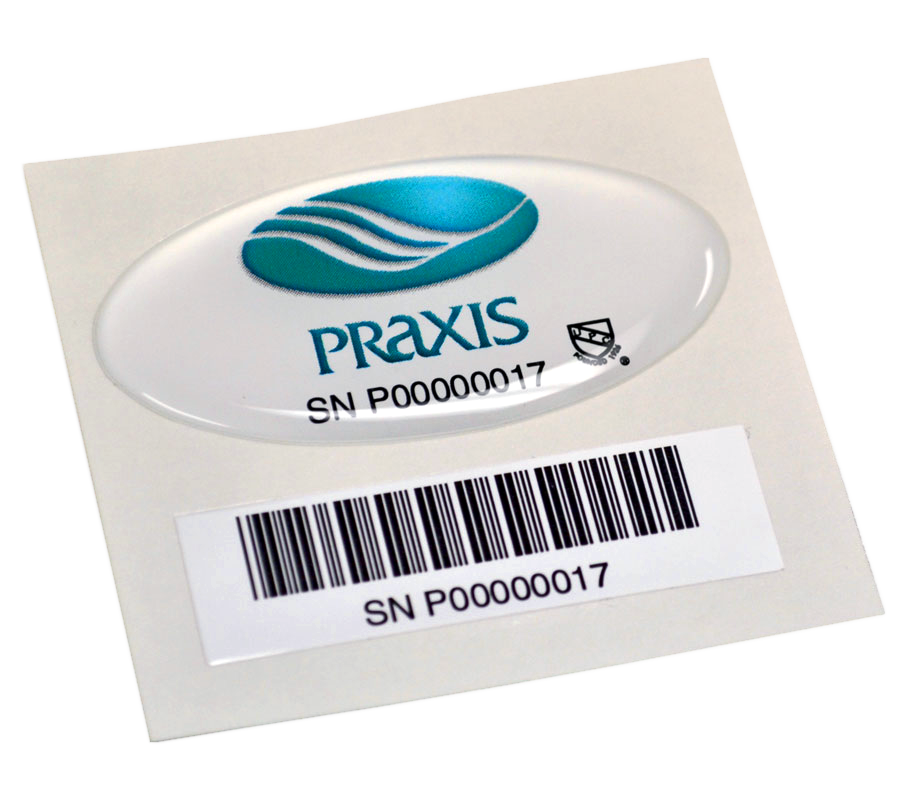
One example involved a large bath-products manufacturing group that needed a better way to identify the manufacturing location and build date of individual bath and shower units when warranty claims occurred.
Label-Aid worked with the company’s manufacturing and marketing teams to develop a system involving two corresponding pieces:
The domed label incorporated the appropriate manufacturer branding along with a human-readable serial number and corresponding barcode. The barcode information could then be scanned into the manufacturer’s database, allowing the bath unit to be traced back to its manufacturing information when needed.
The system gave the manufacturer a practical connection between the physical product, its production information, and its warranty records.
The process proved successful enough that it was adopted by additional manufacturers within the group.
Read the complete Bath Group Success Story.
This type of application illustrates an important point about serialization: the barcode itself is only the carrier of the identifier. The real value comes from connecting that unique identifier to manufacturing, warranty, inventory, service, or other information in the customer’s system.
Even when the correct barcode symbology and label construction have been selected, errors in the information supplied for production can cause problems. Several of the issues Label-Aid encounters happen before the barcode ever reaches the press.
Because Label-Aid uses an Excel file supplied for variable-data and serialization orders, the accuracy of that source information is critical.
Common problems can include incorrect serial numbers, duplicated information, missing records, incorrect URLs, or other errors within the supplied data.
The printing system can accurately reproduce the data it receives—but it cannot determine whether an incorrect value in the source file was actually intended.
Before submitting variable information, customers should review the Excel file carefully and verify:
This review is particularly important on large serialized runs, where an error in the original data file could otherwise be repeated across many labels.
QR Codes and other 2D barcodes are frequently used to direct scanners to online information.
One problem our team encounters is a barcode that correctly encodes a URL—but the URL itself is broken, incorrect, or no longer active.
In that situation, the barcode may technically scan perfectly while still failing its intended purpose.
When a 2D barcode contains a web address, customers should confirm the destination before submitting the job and consider whether the URL will remain stable for the expected life of the label.
This is particularly important for durable product labels. A barcode label may remain on a machine for many years, while websites and page structures can change much more quickly.
A barcode should not simply be reduced until it fits the available artwork.
Its bars or modules must remain large enough to reproduce clearly and scan reliably.
Before changing from a linear barcode to a 2D format, confirm that the equipment used throughout the process can read the selected symbology.
A barcode that performs perfectly when first printed may eventually become unreadable if its material and protective construction are not suited to heat, chemicals, abrasion, UV exposure, moisture, or repeated handling.
The best barcode material still needs the correct adhesive.
Painted metal, powder-coated surfaces, plastics, textured surfaces, glass, and other substrates can require different adhesive characteristics.
When requesting a barcode or serialized-label quote from Label-Aid, providing complete information at the beginning of the project can help avoid production delays and data issues.
Useful information includes:
For serialized or variable-data jobs, also provide the required Excel file containing the variable information.
Before submitting the spreadsheet, verify that the data is complete and correct, especially serial-number sequences and URLs used in QR Codes or other linked 2D barcodes.
If you’re unsure which material, adhesive, or barcode format is appropriate, provide as much information as possible about the application. Label-Aid can use those requirements to help determine an appropriate label construction.
If you’re trying to narrow the options quickly, begin here.
For a short identifier that connects to a database, a 1D barcode may be sufficient.
For more complex information, multiple data fields, or extensive serialization, a 2D barcode may be more practical.
Linear codes require horizontal space.
When the available label area is extremely small, Data Matrix can often package information more efficiently.
But a 2D barcode cannot be made infinitely small. Module size, print capability, scanner performance, and applicable standards still determine practical minimum dimensions.
Determine whether the barcode will be scanned using:
Compatibility with the actual scanning environment should be confirmed before production.
The correct symbology is important, but reliable barcode identification ultimately depends on the complete label system.
A successful industrial barcode label may require decisions about:
symbology → data → barcode dimensions → print method → substrate → adhesive → protective finish → application surface → operating environment → scanner
Changing one part of that system can affect another.
A highly durable material, for example, still needs an adhesive appropriate for the surface.
A perfectly selected adhesive does not help if abrasion destroys the printed barcode.
A high-density barcode offers little value if the scanner cannot reliably resolve it.
That is why industrial barcode labels should be treated as an engineered identification solution rather than simply artwork containing a barcode.
For barcode work, print quality is only one part of quality control. The barcode must also contain the correct information.
Label-Aid has a documented process for verifying that the correct information is scanned from each barcode for every barcode order.
This is particularly important for serialized and variable-data projects, where every label may contain different information.
Verification helps ensure that the machine-readable barcode corresponds to the information required for the order rather than relying solely on the visual appearance of the printed symbol.
This distinction matters because two barcodes can look very similar while encoding entirely different values.
For variable-data projects, there are therefore two important parts of data accuracy:
Customer data integrity: The customer verifies that the information supplied in the required Excel file is correct.
Production verification: Label-Aid follows its documented barcode process to verify that the correct information is being scanned from the produced barcode.
Together, these steps reduce the risk of a label appearing correct while carrying unintended machine-readable information.
Label-Aid Systems manufactures custom industrial barcode labels for applications ranging from inventory and asset identification to product traceability and serialized labeling.
We work with customers to evaluate not only the barcode itself, but the complete label application—including:
Label-Aid is an ISO 9001:2015-certified U.S. manufacturer serving industrial customers since 1976.
Our goal is to produce a barcode label that does more than scan when it leaves our facility. It should remain identifiable and functional throughout the conditions required by the application.
A barcode symbology is the system that defines how information is represented inside a barcode. Different symbologies use different patterns and support different types and quantities of data.
Code 128 is a common choice for general inventory applications because it supports numbers, letters, and symbols while providing good data density.
For very small items, serialized traceability, or applications requiring more encoded information, Data Matrix may be more appropriate.
The best option ultimately depends on your inventory system and scanning equipment.
Code 128 supports a broader character set and can generally encode information more efficiently.
Code 39 remains common in industrial, automotive, defense, and legacy applications where existing standards or systems specify it.
Both are 2D barcode symbologies.
QR Codes are particularly useful when smartphone scanning or connections to online content are important.
Data Matrix is highly compact and commonly used for industrial traceability, small parts, healthcare, and other space-constrained applications.
Code 128 is the barcode symbology.
GS1-128 uses Code 128 while following GS1 standards for structuring information with defined data elements and Application Identifiers.
GS1 DataMatrix uses the Data Matrix symbology together with GS1’s standardized data structures. It can be used to encode standardized identifiers and additional information such as batch, expiration, and serial-number data.
2D barcodes generally hold substantially more information than traditional linear barcodes. QR Code, Data Matrix, and PDF417 can all encode much larger datasets than typical 1D barcode applications.
However, maximum theoretical capacity should rarely be the deciding factor. More encoded information produces a larger or denser symbol, so the application should generally encode only the information it actually needs.
2D codes generally require an imaging or camera-based reader rather than a traditional linear laser scanner.
If an organization is considering switching from 1D to 2D barcodes, existing scanners should be checked for compatibility first.
Yes.
Variable-data printing allows each label in a production run to contain a unique barcode, serial number, asset number, lot code, or other identifier.
Yes.
A label can contain both machine-readable barcode data and matching human-readable information so employees can identify the item even when scanning is unavailable.
Yes.
The correct material depends on the environment. Applications involving heat, chemicals, abrasion, moisture, UV exposure, outdoor use, tampering, or frequent handling may require specialized materials, adhesives, or protective finishes.
Yes.
Barcode elements must remain large and distinct enough for the printing process and scanning system to resolve them reliably. Applicable standards may also specify dimensional requirements.
A quiet zone is the blank space surrounding a barcode that separates it from nearby graphics, text, or other printed elements.
Insufficient quiet-zone space can interfere with reliable scanning.
Yes, but the diameter of the surface, barcode orientation, label dimensions, and scanner all need to be considered.
Small curved surfaces can distort or hide portions of a barcode from the scanner, so the label should be designed specifically for the application.
Choosing a barcode isn’t only about deciding between Code 128, Code 39, QR Code, or Data Matrix.
The right solution also depends on:
Not sure which barcode symbology or label construction fits your application?
Send Label-Aid Systems your application requirements, scanning setup, environment, and label specifications. A dedicated representative can help determine the appropriate barcode format, material, adhesive, and finished construction for your project.